
How VR is Transforming Online Education – As we look into virtual reality in education1, Marc Prensky’s words come to mind. He said, “Technology is not a panacea, but it can be a powerful tool to support learning.” This quote guides us as we explore how VR is changing online education. With education tech investments expected to hit over $400 billion by 2025, VR’s role is growing. It’s making online learning more engaging and effective by meeting different learning needs.
Virtual reality in education offers many benefits. It helps students remember what they learn better and keeps them more engaged. Over 80% of teachers say VR boosts student interest and effort. This shows VR’s positive effect on learning.
VR isn’t just for classrooms anymore. It’s used for immersive learning experiences that reach more students. This makes learning more accessible and cuts costs.
Key Takeaways
- Investments in education technology are projected to exceed $400 billion by 2025, with a significant inclusion of VR technologies.
- VR can improve knowledge retention rates by approximately 75% compared to traditional learning methods.
- Over 80% of educators believe that VR enhances student engagement and motivation.
- 82% of students using VR technology in classrooms express a higher level of interest in the subject matter.
- VR technology allows for real-time experiences and simulations, enriching traditional learning methods.
- More than 6 million students are using virtual reality (VR) in classrooms, with VR usage predicted to increase dramatically over the next five years.
- VR systems like TeachLiVe and Google Expeditions are providing new opportunities for immersive learning experiences.
The Current State of Virtual Reality in Online Learning
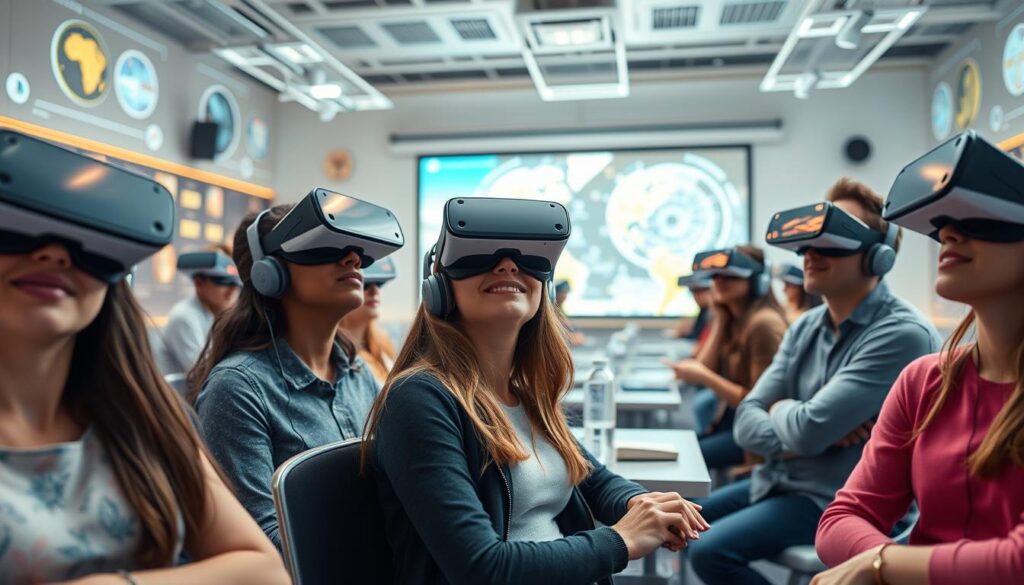
Virtual reality (VR) is changing online education. The Oculus Rift’s launch in 2012 started a big change. Now, we have new tools that make learning more fun and effective.
VR is becoming key in schools. It helps create interactive learning spaces. A study by PwC found VR learners learn 4 times faster than in regular classrooms.
- Enhanced information retention
- Increased productivity
- Improved engagement
VR makes learning better by letting students explore places they can’t visit. It also helps them understand complex ideas. As we keep improving online learning tools, we’ll see even more exciting changes.
How VR Is Transforming Online Education Today
Virtual reality is changing how students learn and interact with information. It makes learning fun and accessible. Studies show that 93% of teachers believe students would love VR in class. With attention spans dropping, VR offers a new way to keep students engaged.
VR creates an immersive experience that cuts down on distractions. Virtual reality integration in curriculum boosts knowledge retention by up to 75%. It also prepares students for real-world challenges in fields like healthcare and aeronautics.
- Increased learner engagement, with immersive environments leading students to become more active participants in their learning process
- Personalized learning paths, allowing students to progress at their own pace, matching their skill levels and interests with tailored assignments
- Collaborative learning opportunities, enabling students from different global locations to work together in the same virtual space, enriching problem-solving skills and cultural exchange
Looking ahead, VR has the power to make education more accessible. It can reach students in remote or underserved areas. With the future of online learning with VR looking bright, we’re set to see even more exciting uses of this technology.
Breaking Down the Virtual Classroom Experience
We’re diving into the virtual classroom experience. It’s clear that immersive learning is changing how we learn. Virtual reality offers many benefits, like making learning fit different styles. It makes complex ideas easier to grasp and remember.
Some key benefits of virtual reality in education include:
- Improved student engagement, with 88% of students feeling more involved in VR lessons
- Enhanced memory retention and understanding, thanks to VR’s multi-sensory experiences
- Opportunities for empathy building, like “Clouds Over Sidra,” showing life from a refugee’s perspective
Exploring the virtual classroom, we see VR’s role in creating interactive learning spaces. Immersive learning experiences can meet the needs of all learners, including those with disabilities. Thanks to organizations like ClassVR, schools with tight budgets can also offer VR, bringing educational benefits of virtual reality to more students.
Recommendation: Top Digital Marketing Courses Online Can Take from Home
Understanding the virtual classroom shows VR’s impact on learning. It’s not just changing how we learn but also making education better. As we look into virtual reality’s future in education, the outlook is bright and full of possibilities.
Real-World Applications Across Different Subjects
We’re seeing big changes in how students learn with virtual reality in education. It’s making learning more fun and real. For example, students can now visit historical sites or do science experiments safely.
VR is used in many ways in schools. Here are a few examples:
- Virtual field trips to places like the Roman ruins
- Doing science experiments without risk
- Looking at detailed medical models
- Traveling virtually to different cultures and places
VR is changing online learning for the better. It makes learning fun and effective. This could lead to better grades and more interested students.
VR is growing fast in schools. It’s changing how we learn. With its interactive and immersive features, VR is a big step forward in online education.
Overcoming Traditional Online Learning Limitations
Traditional online learning often lacks engagement and accessibility. Online education technologies offer new ways to overcome these challenges. Virtual reality (VR) creates immersive learning environments that feel like real life. This makes learning more fun and effective.
VR in online education lets students work together, no matter where they are. It helps build a sense of community, which is hard to find in traditional online learning. With VR, students can understand complex ideas better, leading to better learning outcomes.
- Enhanced student participation and engagement
- Improved accessibility for students with disabilities
- Increased opportunities for collaborative learning and social interaction
- Personalized learning experiences tailored to individual needs and learning styles
By using online education technologies and innovative tools, we can make learning more inclusive and interactive. We’re excited to see how VR and other technologies will change the future of education for the better.
The Future Landscape of VR-Enhanced Education
The future of online learning with VR looks bright. Virtual reality is changing education in many ways. We can expect even more exciting uses of VR in schools and universities.
New VR headsets, like the Meta Quest 3S, will soon be more affordable and advanced. By 2025, 80% of colleges and universities will use VR and AR for learning. This will make education more engaging and effective.
VR can cut training time by up to 40% and boost student scores by nearly 30%. Immersive learning experiences show a 75% retention rate, compared to 5–10% with traditional methods. As VR technology advances, we’ll see even better learning outcomes.
By 2025, VR will be more accessible and affordable. High-performance VR headsets will become common. This will lead to a big change in how we learn, making education more engaging and effective worldwide.
Conclusion: Embracing the Virtual Reality Revolution in Education
Virtual reality (VR) is changing online education. It brings immersive learning that grabs students’ attention and opens new doors. This technology can make education more fun, reachable, and suited to each student’s needs.
VR lets students go on virtual field trips and try hands-on simulations. It breaks the limits of old-school online learning. It also helps with teamwork, personalized teaching, and soft skills. Plus, it helps with mental health issues from remote learning during the pandemic.
The need for good, easy-to-get, and fun online education is growing. Using VR will become key. It can change how we learn, making education more immersive and flexible. This will lead to a fairer and more exciting learning world.
FAQ
What is the potential of VR in transforming online education?
Virtual reality (VR) can make online learning more fun and effective. It offers immersive and interactive experiences. This way, it caters to different learning styles, making education more inclusive.
What are the key technologies and trends shaping VR in online learning?
Key technologies include better VR headsets, motion tracking, and interactive software. Recent trends show more adoption of virtual learning. Major players in educational VR technology are also contributing.
How is VR transforming online education today?
VR makes learning more engaging and interactive. It has a bright future in online education. It can be used in many subjects, making learning fun and accessible.
What is the virtual classroom experience like with VR?
VR creates interactive learning environments. Students engage more actively. It also improves teacher-student dynamics. The immersive nature of VR enhances learning environments significantly.
How is VR being applied across different educational subjects?
VR is used in various subjects, like history and science. Students can explore historical sites or conduct virtual experiments. This shows VR’s versatility in improving learning outcomes.
How does VR overcome the limitations of traditional online learning?
VR addresses distance learning challenges, like improving student participation. It also makes education more accessible. VR is making online learning more inclusive and engaging.
What is the future landscape of VR-enhanced education?
The future of VR in education is promising. By 2025, we’ll see more VR in global education systems. This could change how we learn, making it more effective and engaging.