
Virtual Learning – As we explore the changing world of education, a big question pops up. What’s the future of virtual learning? How will it change how we learn online? With nearly 50% of parents looking for new schools for the 2023-24 year, virtual learning is gaining traction.
We’ll dive into virtual learning’s benefits and hurdles. We’ll also look at tools and strategies for better online education. This includes virtual academies and learning plans tailored to each student’s needs.
Key Takeaways
- Virtual learning is becoming a top choice for students of all ages. It offers convenience, access, and learning plans made just for you.
- Virtual academies help students in remote or rural areas get the same education as city kids. They provide the same curriculum and programs.
- These academies offer learning plans that fit each student’s pace. They add extra resources and fun activities to meet different needs.
- High school students can get certifications and college credits at the same time. This is thanks to virtual learning programs.
- Launch, a virtual academy, offers over 500 courses to students in hundreds of districts. It has over 300 full-time teachers and more than 60 team members.
- More than 20% of Launch’s team members have kids in Launch courses. This shows how well virtual learning works.
- Springfield Public Schools started online courses in 2012. They’ve served over 25,000 learners, helping virtual learning grow.
Introduction to Virtual Learning
Virtual learning is now a big part of education. It lets students learn at their own speed and in their own space. This method uses digital tools for learning, like online classes and websites.
Many kids can’t get to school easily or don’t fit in with their school’s style. This is why virtual learning is growing. It lets students find courses and resources online, no matter where they are.
Recommendation: Distance Education: Your Path to Flexible Learning
Virtual learning has many benefits. It makes learning more accessible and cheaper. Students can learn from anywhere with internet. We’ll look into how virtual learning has changed education in the next parts.
What is Virtual Learning?
Virtual learning uses digital tools for learning. This includes online classes and websites. It’s a key part of today’s education, giving students flexibility and freedom.
The Evolution of Online Education
Online education has grown fast, thanks to new tech and teaching methods. Virtual learning is now a big part of education. It lets students find many courses and resources online, no matter where they are.
Benefits of Virtual Learning
Virtual learning brings many benefits like flexibility, convenience, and saving money. Students can take online courses from anywhere, at any time. This is great for those with work or family duties, as it lets them study when it’s best for them.
Virtual learning is also cheaper. For example, Drexel University offers a 25% discount on tuition for online students. It also cuts down on costs like room, board, transportation, and textbooks. On average, students spend over $1,000 a year on these items, which can be saved with online learning.
Some key benefits of virtual learning are:
- Flexibility and convenience
- Cost-effectiveness
- Access to diverse resources, including interactive tools and multimedia content
- Opportunities for career advancement and professional development
- Improved time management skills
Overall, virtual learning offers many advantages. It makes studying better and can help students get ahead in their careers. With online courses, students can get quality education from anywhere, saving money and time.
| Benefits of Virtual Learning | Description |
|---|---|
| Flexibility and Convenience | Access to online courses from anywhere, at any time |
| Cost-Effectiveness | Reduced tuition costs, elimination of room and board, transportation, and textbook costs |
| Access to Diverse Resources | Interactive tools, multimedia content, and online libraries |
Challenges of Virtual Learning
Virtual learning has changed how we learn, but it comes with challenges. Issues like connectivity problems and platform glitches can affect learning. These problems are common in distance and remote learning.
Staying motivated and focused is hard in e-learning. Without face-to-face talks, it’s easy to get sidetracked. Also, there’s less chance to socialize and interact with others in remote learning.
Some common challenges of virtual learning include:
- Technical issues, such as inadequate access to technology or unreliable internet
- Lack of face-to-face interaction, leading to feelings of isolation
- Difficulty in maintaining motivation and focus
- Limited opportunities for socialization and human interaction
Even with these challenges, virtual learning has many benefits. It’s flexible and convenient. By tackling these issues, we can make virtual learning better and more engaging.
| Challenge | Description |
|---|---|
| Technical Issues | Connectivity problems, platform glitches, and inadequate access to technology |
| Lack of Face-to-Face Interaction | Feelings of isolation, limited socialization, and reduced engagement |
| Motivation and Focus | Difficulty in maintaining motivation, focus, and interest in e-learning environments |
Essential Tools for Virtual Learning
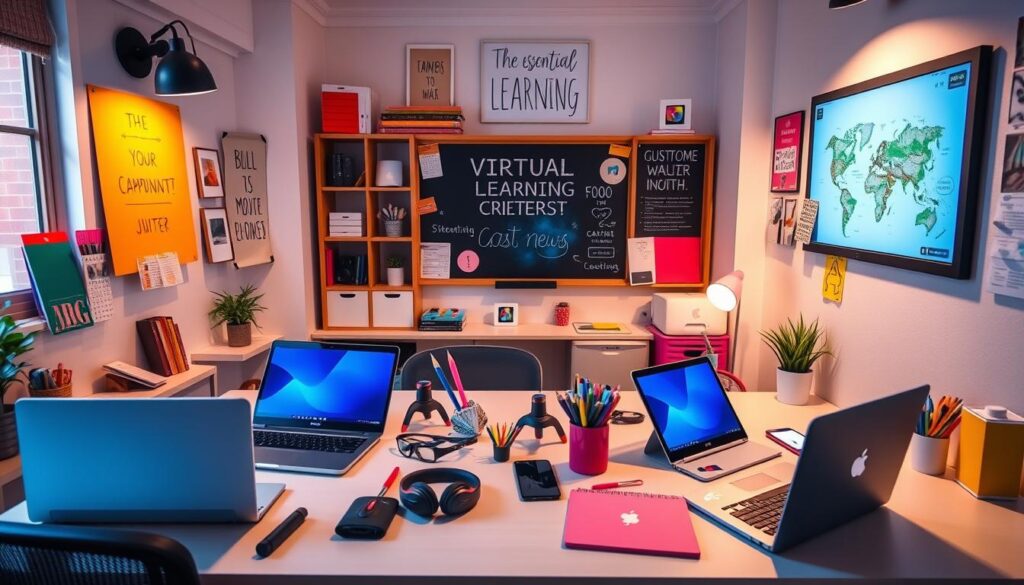
Online education is becoming more common, and we need the right tools to learn well. We need learning management systems (LMS), virtual collaboration platforms, and multimedia resources. These tools help us manage our studies and work together with others.
Platforms like Blackboard and Google Classroom are popular for online learning. They offer features like personalized learning paths and tools for teamwork. Astria Learning says LMS can tailor learning, while collaboration platforms build community.
Learning Management Systems (LMS)
LMS are key for online learning. They keep all your study materials in one place. You can find LMS like Blackboard, Canvas, and Moodle. They have tools for learning paths, teamwork, and multimedia.
Virtual Collaboration Platforms
These platforms help us work together and talk to each other. They have tools like video calls, messaging, and file sharing. Zoom, Google Meet, and Microsoft Teams are some examples.
Multimedia Resources
Resources like videos and podcasts make learning fun and interactive. They help different learning styles and fit well in online courses. Khan Academy, Crash Course, and TED-Ed are great examples.
| Tool | Features | Benefits |
|---|---|---|
| Learning Management Systems (LMS) | Personalized learning paths, virtual collaboration tools, multimedia resources | Improved student engagement, increased accessibility, enhanced learning experience |
| Virtual Collaboration Platforms | Video conferencing, instant messaging, file sharing | Facilitated teamwork, improved communication, increased productivity |
| Multimedia Resources | Videos, podcasts, interactive simulations | Enhanced learning experience, supported range of learning styles, increased student engagement |
In summary, the right tools are vital for online learning. They make studying better, help us work together, and keep us interested in learning.
Strategies for Successful Virtual Learning
Virtual learning requires special strategies for success. It’s important to create a good learning environment and manage our time well. This helps us succeed in online courses and distance learning.
Having a dedicated learning space is key. It should be free from distractions so we can focus. Using technology, like video conferencing tools, can also improve our learning experience. It connects us with teachers and classmates, and gives us access to lots of information.
Managing our time is also critical. We need to balance school with other parts of our lives. A schedule helps us stay on track. Breaking tasks into smaller parts, or “chunking,” can also help us stay focused.
Joining virtual study groups and social networks can also help. These groups offer chances to discuss, work together, and get feedback. They help us understand the material better and stay motivated.
Success in virtual learning comes from using various strategies. These include self-directed learning, good time management, and being part of a community. By developing these skills, we can excel in online courses and reach our goals.
| Strategy | Description |
|---|---|
| Creating a dedicated learning space | Designate a distraction-free area for learning |
| Using technology to facilitate learning | Utilize video conferencing tools and online resources |
| Time management | Create a structured schedule and break tasks into smaller segments |
The Role of Instructors in Virtual Learning
In the world of online education, instructors are key. They give feedback and encourage students to participate. They use many ways to get students involved, like discussion forums and live chats.
Studies show that about 70% of students in online classes feel more engaged than in traditional schools. This shows how important instructors are in making online learning fun and interactive. They use platforms like Google Classroom to make learning available anytime.
Here are some ways instructors can boost student engagement in online classes:
- Using multimedia like videos and audio to add to text
- Getting students to join in discussions and chats
- Providing feedback and assessments to track progress
Instructors can make online learning better by using e-learning tools. These tools help create fun and interactive lessons. By using these tools, instructors help students do well in online classes, making online education better for everyone.
Future Trends in Virtual Learning
Virtual learning is set to become even more important in the future. Online education will keep changing how we learn. With digital learning on the rise, we’ll see more learning tailored to each person.
Reports show that 53% of students in the U.S. took online courses in 2021. This shows how much people want to learn online.
Artificial Intelligence (AI) will also change virtual learning a lot. AI can make learning more personal and help with tests and tutoring. For instance, adaptive learning models use data to create learning paths just for you. Micro-credentials focus on specific skills and are tested to prove you know them.
Some big trends in virtual learning include:
- Growth of hybrid learning models, which combine online and offline learning
- Influence of Artificial Intelligence (AI) on personalized learning experiences
- Increasing demand for online education, with 63% of students favoring an online learning model for its flexibility
As virtual learning grows, we’ll see new tech and ways to learn. The AI education market is expected to grow fast, showing virtual learning is here to stay.
| Trend | Description |
|---|---|
| Hybrid Learning Models | Combine online and offline learning for a more flexible and effective learning experience |
| Artificial Intelligence (AI) | Enable personalized learning experiences, adaptive assessments, and intelligent tutoring systems |
| Micro-credentials | Address specific skills and are embedded with evidence-based assessments |
Real-World Examples of Virtual Learning

Virtual learning is more than just a theory. It’s been used in many real-world settings. eSchool Media Contributors say virtual academies offer students personalized learning. This shows how virtual learning can make learning fun and unique for each student.
Online courses and distance learning have also shown their worth. For example, virtual field trips let students explore places without leaving class. These trips can be as exciting as real ones and are tailored to what students want to learn.
Here are some examples of successful virtual learning programs:
- Discovery VR offers over 1,000 virtual destinations for educational field trips, boosting knowledge retention by up to 75%.
- VR training in medicine has seen a 63% increase in knowledge retention and cut training costs by up to 50%.
- VR labs from Labster have improved STEM scores by 76%.
These examples show how virtual learning can make learning exciting. By using online courses and distance learning, schools can offer a flexible and personalized education.
| Virtual Learning Platform | Features | Benefits |
|---|---|---|
| Discovery VR | Over 1,000 virtual destinations | Enhances knowledge retention rates by up to 75% |
| Labster | Engaging VR labs | Improves STEM test scores by 76% |
Conclusion: Embracing Virtual Learning for the Future
Virtual learning is more than just a trend; it’s changing how we learn. It gives students the flexibility and personal touch they need in today’s fast-paced world. This approach to education is here to stay.
Learning for life is key, and virtual learning makes it possible. It lets people learn new things whenever and wherever they want. This way, everyone can get the education they need, no matter who they are or where they are.
New tech like virtual reality and AI is making virtual learning even better. These tools offer real, hands-on learning experiences. They help students get ready for the digital world they’ll live in.
As we move forward, virtual learning will play a big role. It’s about creating a culture of lifelong learning. By using online education and e-learning, we can help people succeed in the digital age. Together, we can build a brighter future.
FAQ
What is virtual learning?
Virtual learning uses digital tools for learning. It includes online courses and web-based platforms.
What are the benefits of virtual learning?
Virtual learning offers flexibility and convenience. It’s also cost-effective. Plus, it provides access to many resources like interactive tools and multimedia content.
What are the challenges of virtual learning?
Virtual learning faces technical issues and keeping motivation. It also lacks face-to-face interaction, which can be a challenge.
What are the essential tools for virtual learning?
Key tools include learning management systems (LMS) and virtual collaboration platforms. Multimedia resources like videos and podcasts are also important.
What strategies are important for successful virtual learning?
To succeed, set up a good learning environment. Also, manage your time well.
What is the role of instructors in virtual learning?
Instructors are key in virtual learning. They give feedback and encourage students through forums and live chats.
What are the future trends in virtual learning?
Future trends include AI’s influence and hybrid learning models. These combine online and offline learning.
Can you provide real-world examples of successful virtual learning?
Yes, we can look at case studies and testimonials. They show how virtual learning works in real life.
Reference